A note on measurements: this guide is written for US sewists, so it uses US units first: inches, yards
and US paper sizes (Letter, 36 × 48 in). Metric equivalents are in brackets where they matter. If you're not used to US
measurements, convert them before you cut: 1 in = 2.54 cm, 1 yd = 91.4 cm.
Plus size sewing patterns are patterns drafted for larger bodies, and the best ones are graded from a block made for a fuller figure rather than simply scaled up from a small size. To choose one, ignore the size label and compare your own measurements with the size chart, check which cup size it is drafted for, and pick a style that only has to fit closely in one or two places. This guide covers what plus size ranges mean, how to choose your size, the adjustments you are most likely to make and which styles are easiest to fit.
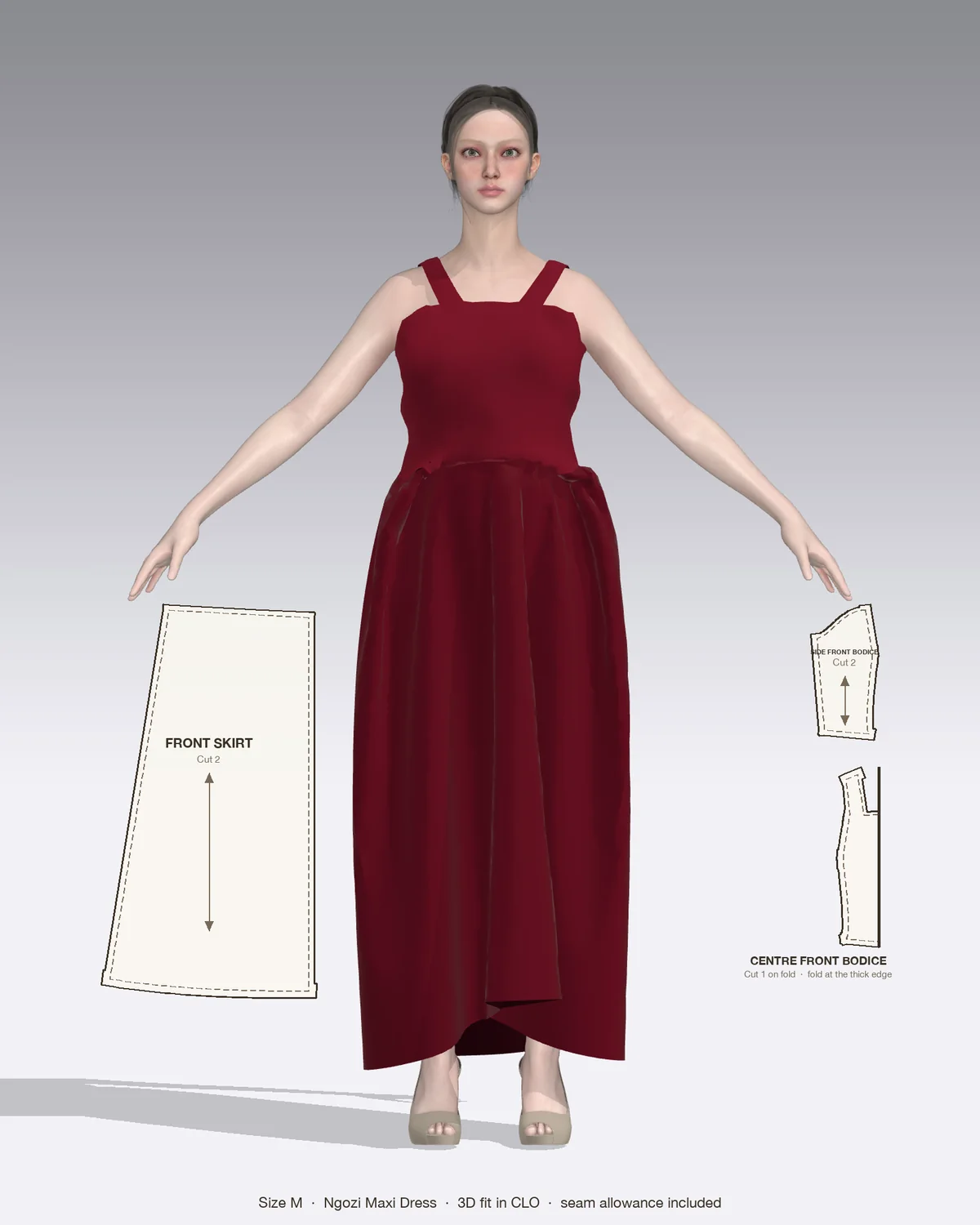
Draped in CLO 3D: the Ngozi with its pattern pieces, drawn to scale.
What “plus size” means in sewing patterns
Sewing pattern sizes don’t follow ready-to-wear sizes, and there is no shared standard for where plus sizes start. Some companies mark their larger sizes with a W for Women’s, some run one continuous range, and a few draft two separate ranges from two different blocks.
The difference between those approaches matters more than the label:
One block, graded up. Many patterns start from a mid-size base and add the same amount at every size. The bust grows, but the shoulders, armholes and bust point move by the same fixed steps, so the largest sizes can end up with wide shoulders and a bust that sits too high.
A separate curvy or plus block. Some companies draft their larger sizes from a block made on a larger body. Cashmerette, for example, offers sizes 12–32, drafted for C to H cups, alongside a 0–16 range.
Cup sizes. A pattern with several cup options lets you pick the bust that matches your body instead of adjusting it yourself.
Read the size chart and the finished garment measurements before you buy. A pattern whose largest size is just below your measurements is still worth considering if the style is loose, but a fitted bodice will need more work.
How to choose your size
Take your measurements in the bra you’ll wear with the garment, with the tape level and snug but not tight. The guide to taking body measurements for sewing shows where each one goes.
Measure your high bust (under the arms, above the bust), full bust, waist and full hip.
Measure your upper arm at its widest point, usually just below the armpit, if the pattern has sleeves.
Find your sewing cup size. Subtract your high bust from your full bust: about 1 in (2.5 cm) is an A cup, 2 in (5 cm) a B, 3 in (7.5 cm) a C and 4 in (10 cm) a D.
Choose the bodice size. If the pattern is drafted for your cup size, use your full bust. If it is drafted for a B cup and your difference is 3 in or more, choose from your high bust plus 2 in (5 cm) and plan a full bust adjustment.
Choose the waist and hip sizes from those measurements, and blend between them if they fall in different sizes. Grading between sizes shows how to draw the new lines.
Compare the finished measurements. Subtract your body measurement from the finished garment measurement to see the ease. Around 2–3 in (5–7.5 cm) at the bust is comfortable in a fitted woven bodice; loose styles have much more.
Check the lengths. Compare the pattern’s back waist length and skirt length with yours, and lengthen or shorten on the marked lines before you cut.
What to look for in a plus size pattern
A size chart that covers you without grading up. Adding a little is easy; adding several sizes isn’t.
Finished measurements printed in the pattern, not just body measurements, so you know how much ease you are getting.
The cup size it is drafted for. If it isn’t stated, assume a B cup.
Princess seams or darts.Princess seams run down each side of the front, giving you long seams to let out or take in, which makes small changes at the bust, waist and tummy easier than on a single dart.
Wide straps or sleeves if you want to wear a regular bra, and a closure that opens far enough to get the garment on easily.
A skirt that only fits at the waist. Gathered, A-line and flared skirts skim the hip, so you only fit one seam.
Knits for a first project. Their stretch forgives small fitting errors, although they need a stretch needle and a stretch stitch.
The fit adjustments plus size sewists make most
Full bust adjustment
If the bodice is drafted for a smaller cup than yours, the size that fits your full bust will be too big in the shoulders and neckline. Cut the size that fits your frame and add room only over the bust. The full bust adjustment guide covers a darted bodice step by step. On a princess-seamed bodice, the extra room goes into the side front panel instead of a dart.
Full bicep adjustment
Set-in sleeves that pull across the upper arm need more width, not a bigger size everywhere.
Work out the amount. Your upper arm measurement, minus the pattern sleeve’s width at the widest point (without seam allowances), plus the ease you want. About 1–3 in (2.5–7.5 cm) of ease is typical for a woven sleeve.
Draw a line from the top of the sleeve cap straight down to the hem, parallel to the grainline, and a second line across the widest part of the sleeve.
Cut the vertical line from the hem up to the seam line at the cap, and the horizontal line out to the seam line at each side, leaving paper hinges.
Spread the sleeve until the gap at the bicep equals your amount, then tape paper behind it.
Redraw the cap and hem in smooth lines. If you added more than 1 in (2.5 cm), the cap gets longer, so lower the bodice armhole or add to the side seam at the underarm by half the amount you added, so the sleeve still fits the armhole.
Length and the waistline
Larger sizes often lengthen the torso as well as widening it, and that doesn’t suit everyone. Check where the waist seam falls on your body. On a dress with a waist seam, lengthen or shorten the bodice on the marked line so the seam sits at your natural waist; a waist seam that sits too high pulls across the bust.
Grading beyond the largest size
You can add 1–2 in (2.5–5 cm) by spreading the side seams and princess seams evenly, then truing the armhole and waistline. Past that, the bust point, armhole depth and shoulder width all need to change too, and a pattern drafted for your size range will fit better than a big grade.
Patterns by Nini sizes, and which patterns suit
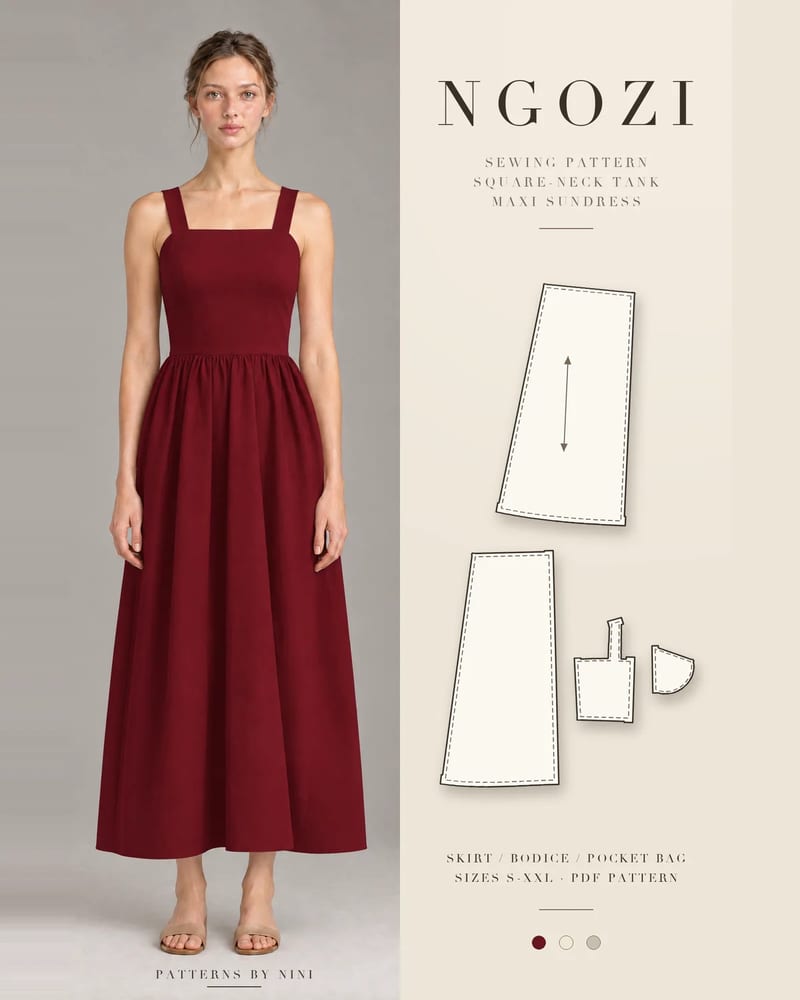
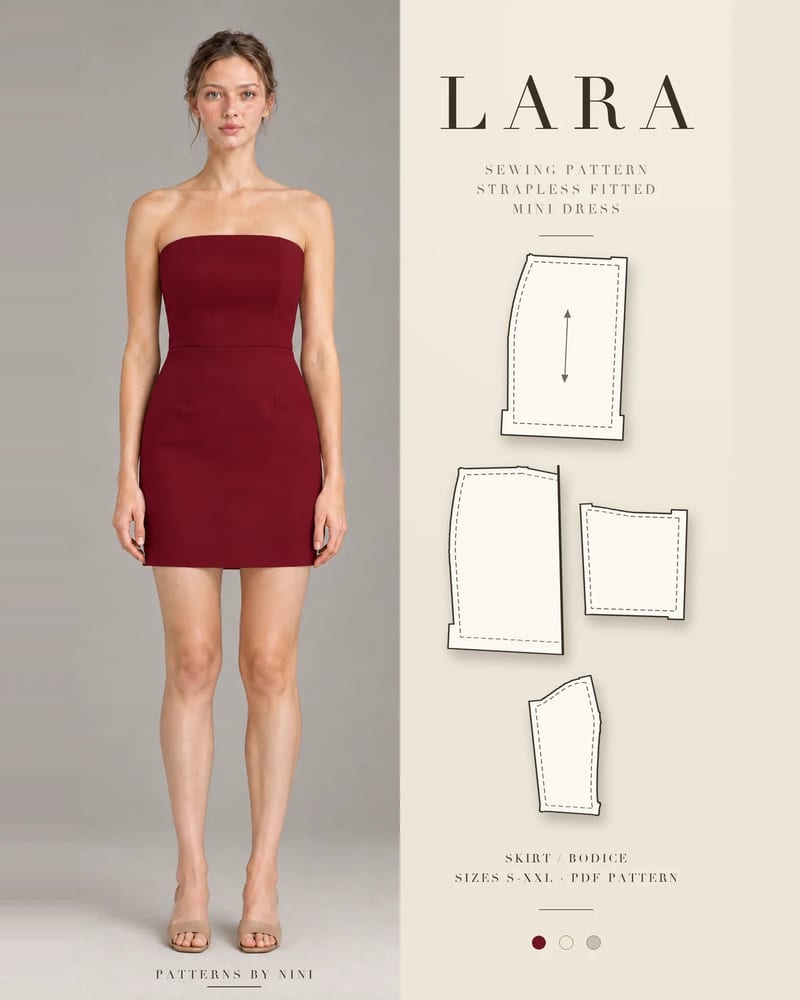
Most Patterns by Nini dresses come in sizes S–XXL. On the Ngozi square-neck maxi sundress, the XXL is drafted for a body of about 43¼ in (110 cm) bust, 36¼ in (92 cm) waist and 45⅝ in (116 cm) hip, at a height of 5 ft 6 in (168 cm). That covers the smaller end of many plus size ranges rather than all of it, so compare your numbers with the size chart in the download before you buy.
Within that range, Ngozi is one of the easiest dresses to fit:
Front princess seams and back waist darts on a fully lined bodice give you several places to adjust the bust and waist.
Tank straps 1⅜ in (3.5 cm) wide with a square neckline.
A full skirt gathered at the natural waist, so the skirt only fits at one seam and skims the hips.
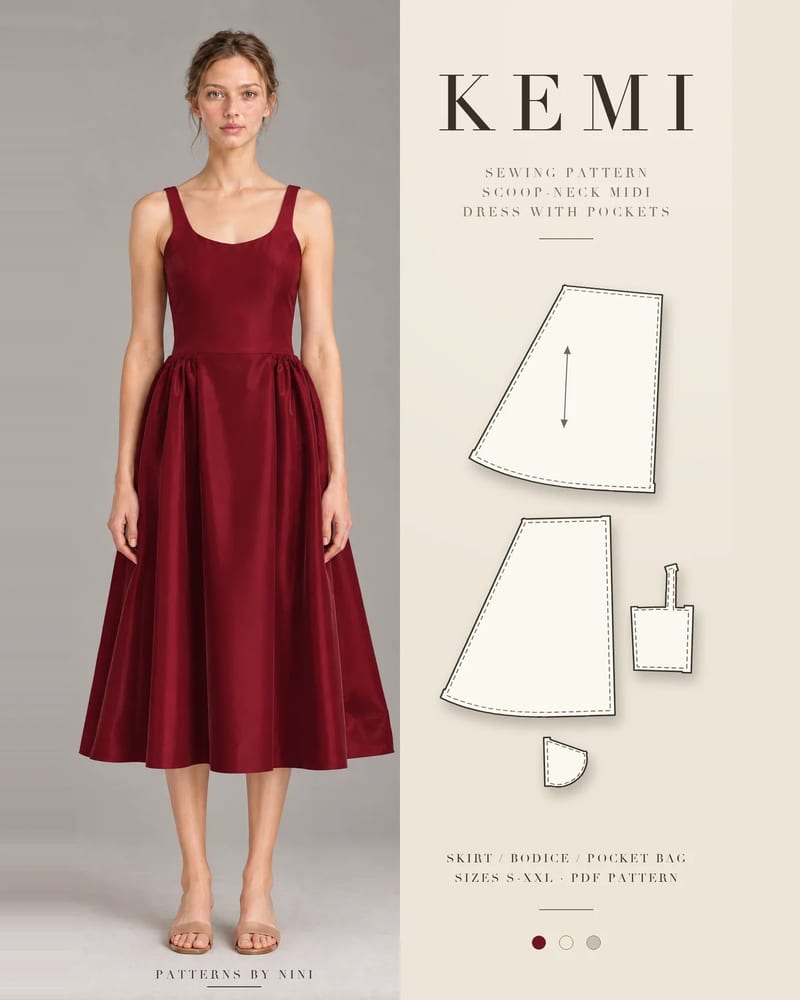
The same princess-seamed bodice idea runs through the Kemi midi dress and the Chioma midi dress. If you’d rather do a classic dart FBA, the Evie A-line dress and the Alice short-sleeve midi have bust and waist darts. For a pull-on knit with no zipper or darts, the Dupe T-shirt dress is free through the newsletter. If your measurements are above the XXL, the custom-fit pattern page offers the Nina shift dress drafted to your own measurements.
Common mistakes and how to fix them
Problem
Likely cause
Fix
Shoulders and neckline gape, bust fits
Size chosen from the full bust on a B-cup pattern
Choose from high bust plus 2 in and do an FBA
Sleeves tight on the upper arm
Bicep not checked against the sleeve
Do a full bicep adjustment and adjust the armhole to match
Waist seam sits above the waist
Bodice too short for your torso
Lengthen the bodice on the marked line
Front hem rides up
No extra length over the bust
Add length in the FBA, or lower the front hem
Bought a size by its label
Pattern sizes don’t match store sizes
Choose from your measurements and the finished measurements
Fit is close but not right after grading several sizes
Grading only adds width
Choose a pattern drafted for your size range
Test the fit first
Before cutting your good fabric, sew a quick muslin of the bodice in cheap cotton of a similar weight, with long basting stitches, and try it on with the right bra. The guide on how to make a muslin shows what to check. Fix the bust, the upper arm and the waist position on the muslin, transfer the changes to your pattern, and the finished dress will be far closer to a good fit when you first try it on.
Frequently asked questions
What size is considered plus size in sewing patterns?
There is no single standard. Some companies label larger sizes with a W (Women's) and others simply extend their numbers, so the same body can be a different size from brand to brand. Ignore the label and compare your full bust, high bust, waist and hip with each pattern's size chart, then read the finished garment measurements before you buy or cut.
Should I choose a plus size pattern by my full bust or high bust?
Check which cup size the pattern is drafted for. If it is drafted for a B cup and your full bust is 3 in (7.5 cm) or more bigger than your high bust, choose the bodice size from your high bust plus 2 in (5 cm) and do a full bust adjustment. If the pattern is drafted for your cup size, choose from the full bust.
Can I grade a sewing pattern up beyond its largest size?
You can add an inch or two (2.5 to 5 cm) by spreading the pattern at the side seams, princess seams and bust, but grading several sizes beyond the chart gets risky, because larger bodies are not just wider. Armholes, bust point, neckline and length change too. Beyond a small amount, a pattern drafted for your size range will fit better.
What styles are easiest to fit for plus size sewing?
Styles that fit closely in only one or two places. A-line and gathered skirts only need to fit at the waist, wrap and tie styles adjust as you wear them, and princess seams give you several seams to let out or take in. Knits are forgiving too. Fitted bodices with set-in sleeves need the most fitting.
What sizes do Patterns by Nini dresses come in?
Most dresses come in S–XXL. On the Ngozi maxi dress, the XXL is drafted for a body of about 43¼ in (110 cm) bust, 36¼ in (92 cm) waist and 45⅝ in (116 cm) hip, at a height of 5 ft 6 in (168 cm). Every download includes a size chart and finished measurements in inches and centimeters.
How to choose a sewing pattern size: measure your bust, waist and hip, read the body chart, check finished measurements for ease and pick a starting size.
How to make a muslin for sewing: choose test fabric, mark the pattern, baste it together, fit it on your body and move every change back to the paper.
Help us understand what inspires you
May we use Pinterest cookies to measure visits and purchases and improve our advertising? You can shop either way and change your choice in Cookie settings. Privacy policy
 Patterns