 Patterns
Seam ripper for sewing: how to use one without ripping fabric
How to use a seam ripper for sewing: what the point, blade and red ball do, three ways to unpick, serger and zipper stitches, and when to replace it.
A note on measurements: this guide is written for US sewists, so it uses US units first: inches, yards and US paper sizes (Letter, 36 × 48 in). Metric equivalents are in brackets where they matter. If you're not used to US measurements, convert them before you cut: 1 in = 2.54 cm, 1 yd = 91.4 cm.
The best sewing patterns for beginners are loose-fitting garments with few pattern pieces, no closures or one simple one, and a recommended fabric that is a stable woven such as cotton or linen. A beginner label on the pattern helps, but the shape, the closures and the fabric list tell you more. This guide shows how to read a pattern before you buy it, which features to look for and skip, and how to pick your size so your first garment fits.
Look for these five things when you compare patterns:
The difficulty rating is a starting point, not a promise. A fitted dress can be rated easy because the steps are simple, yet still need fit changes. Check the line drawing, the flat technical sketch, to see every seam, dart and closure the photos may hide.
Save these for project three or later:
The back of a paper envelope, or the product page and instructions of a PDF pattern, lists everything you need to know:
Paper patterns arrive printed. PDF sewing patterns arrive instantly and you print them yourself, either at home on US Letter or A4 pages taped together, or as a large-format file at a copy shop. Before printing a full PDF, print the test square page alone and measure it; this guide to printing PDF sewing patterns walks through scaling and assembly. Many sewists trace their size onto pattern paper so they can keep the original for another size later.
Your ready-to-wear size won’t match pattern sizing, so measure instead.
| Mistake | What happens | What to do instead |
|---|---|---|
| Skipping the prewash | The garment shrinks the first time you wash it | Wash and dry the fabric the way you’ll care for the finished piece before cutting |
| Ignoring the grainline | The garment twists or hangs unevenly | Lay each piece with its grainline arrow parallel to the selvage, measuring both ends |
| Not reading the instructions first | A step done out of order has to be unpicked | Read every step once before you cut, and mark the steps you don’t understand |
| Sewing without pressing | Seams look puffy and homemade | Press each seam as sewn, then open or to one side, before crossing it with another seam |
| Swapping the fabric | A crisp style collapses, or a drapey one stands stiff | Use a fabric from the suggested list |
| Trying a technique for the first time on the garment | Wobbly darts or a crooked zipper on the outside | Practice on scraps of the same fabric first |
Expect a few imperfections on the first garment. Most won’t show when it’s worn.
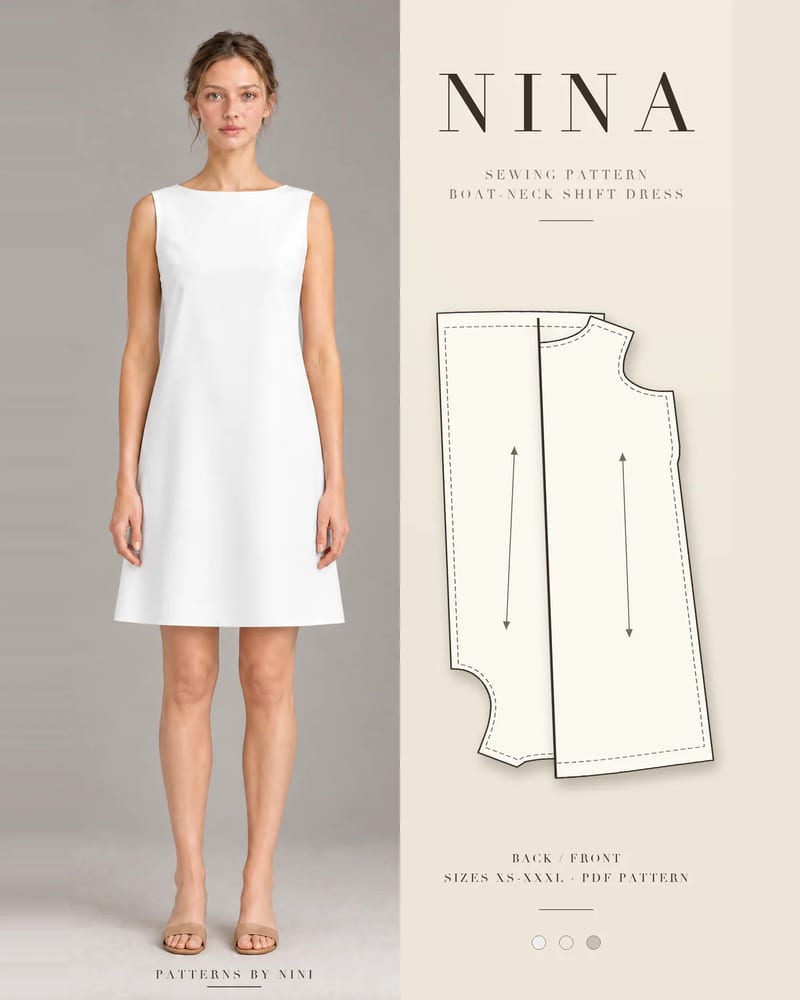
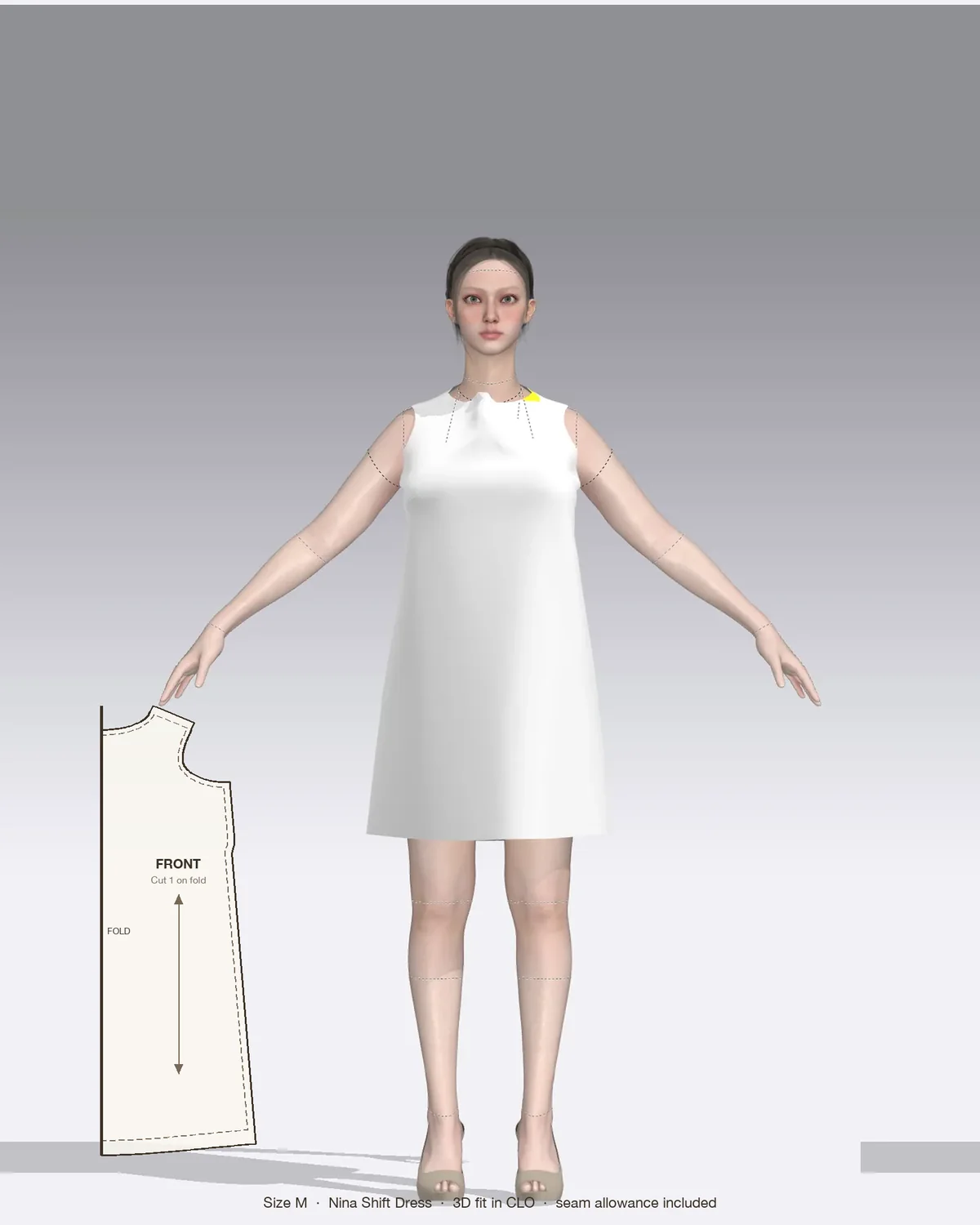
Once you’ve sewn a pull-on skirt or top (the guide to how to sew a skirt covers a gathered skirt with a waistband and zipper), a simple dress is the natural next step (the guide to how to sew a dress walks through the whole order). If you’d rather start with pants, the guide to how to sew pants covers a pull-on elastic-waist pair from cutting to hem. The Nina shift dress is the beginner-level pattern in the Patterns by Nini range. It’s a sleeveless A-line shift with a knee-length skirt, so there are no sleeves to set in and the fit is relaxed below the bust.
It introduces exactly two new skills: bust darts for shape and an invisible zipper at the center back. The boat neck and armholes are finished with all-in-one facings interfaced with lightweight fusible interfacing, so there’s no bias binding to wrestle around curves. The suggested fabrics are the forgiving kind: linen, cotton poplin, chambray, crepe and Tencel twill.
Nina comes in sizes XS to L. Like every pattern in the range, it includes 36 × 48 in and A0 copy-shop files, US Letter and A4 print-at-home files with test squares, sewing instructions and a size chart in inches and centimeters.
When you’re ready for more, the confident-beginner patterns add one or two skills each. The Tobi pinafore dress adds an interfaced waistband and a gathered skirt, and the Bear teddy jacket has six pattern pieces, no lining and an exposed separating zip.
How to use a seam ripper for sewing: what the point, blade and red ball do, three ways to unpick, serger and zipper stitches, and when to replace it.
What are seams in sewing? The line that joins two pieces of fabric. Learn the seam allowance, how to sew a plain seam, the main seam types and finishes.
How to do a full bust adjustment: measure to see if you need one, slash and spread the front pattern piece, redraw the bust dart and true the side seam and hem.
May we use Pinterest cookies to measure visits and purchases and improve our advertising? You can shop either way and change your choice in Cookie settings. Privacy policy